
🍋 The Lemon Take
Why this matters: Home blood pressure readings are more useful when they are taken consistently and under similar conditions. Timing, cuff fit, body position, caffeine, exercise, stress, and medication timing can all change a reading.
TL;DR: The best time to take blood pressure is the time your clinician recommends and you can repeat. Many people track in the morning and evening, but consistency and technique matter most.
The positive: A simple routine can help you spot trends, understand context, and bring clearer information to your healthcare professional.
The caution: Home readings do not diagnose hypertension or tell you how to change medication on your own. Seek medical guidance for very high or very low readings, repeated unusual patterns, or symptoms such as chest pain, shortness of breath, severe headache, weakness, fainting, or confusion.
When Is The Best Time To Take Blood Pressure At Home?
For most people who are checking your blood pressure at home, the best routine is the one your healthcare professional recommends and you can follow consistently. Many clinicians ask people with hypertension, elevated blood pressure, or risk factors for heart disease to measure in the morning before medications or breakfast, and again in the evening. Others may suggest a different schedule based on your health history.
The exact clock time matters less than consistency. Measuring at the same time each day makes it easier to compare trends instead of reacting to one random number.
Home tracking can be especially useful if you are monitoring high blood pressure, adjusting lifestyle changes, taking blood pressure medication, or trying to understand whether office readings may reflect white coat hypertension. It can also help your clinician see patterns that a single appointment reading may miss.
Why Timing And Technique Matter
Blood pressure changes throughout the day. It can rise after caffeine, exercise, stress, smoking, alcohol, tobacco use, pain, poor sleep, or even rushing into a chair and immediately pressing start. It can also be affected by a full bladder, talking during the reading, or using the wrong cuff size.
That is why the best time to check your blood pressure is not just about morning versus evening. It is about taking the reading under similar conditions each time.
A blood pressure reading includes systolic blood pressure, the top number, and diastolic, the bottom number. Some monitors also show heart rate. One reading can be useful, but the trend is usually more informative than a single number.
A Simple Home Blood Pressure Routine
Use this routine unless your healthcare professional gives you different instructions.
- Choose your tracking window. Pick a morning time and/or evening time you can repeat.
- Avoid common triggers first. For about 30 minutes before measuring, avoid caffeine, exercise, smoking, and alcohol.
- Empty your bladder. A full bladder can affect the reading.
- Sit quietly for five minutes. Keep your back supported and feet flat on the floor.
- Use the right arm position. Rest your arm on a table so the cuff is at heart level.
- Take two readings. Wait about one minute between readings and record both if your clinician recommends it.
- Track context. Note medication timing, stress, sleep, symptoms, and anything unusual.
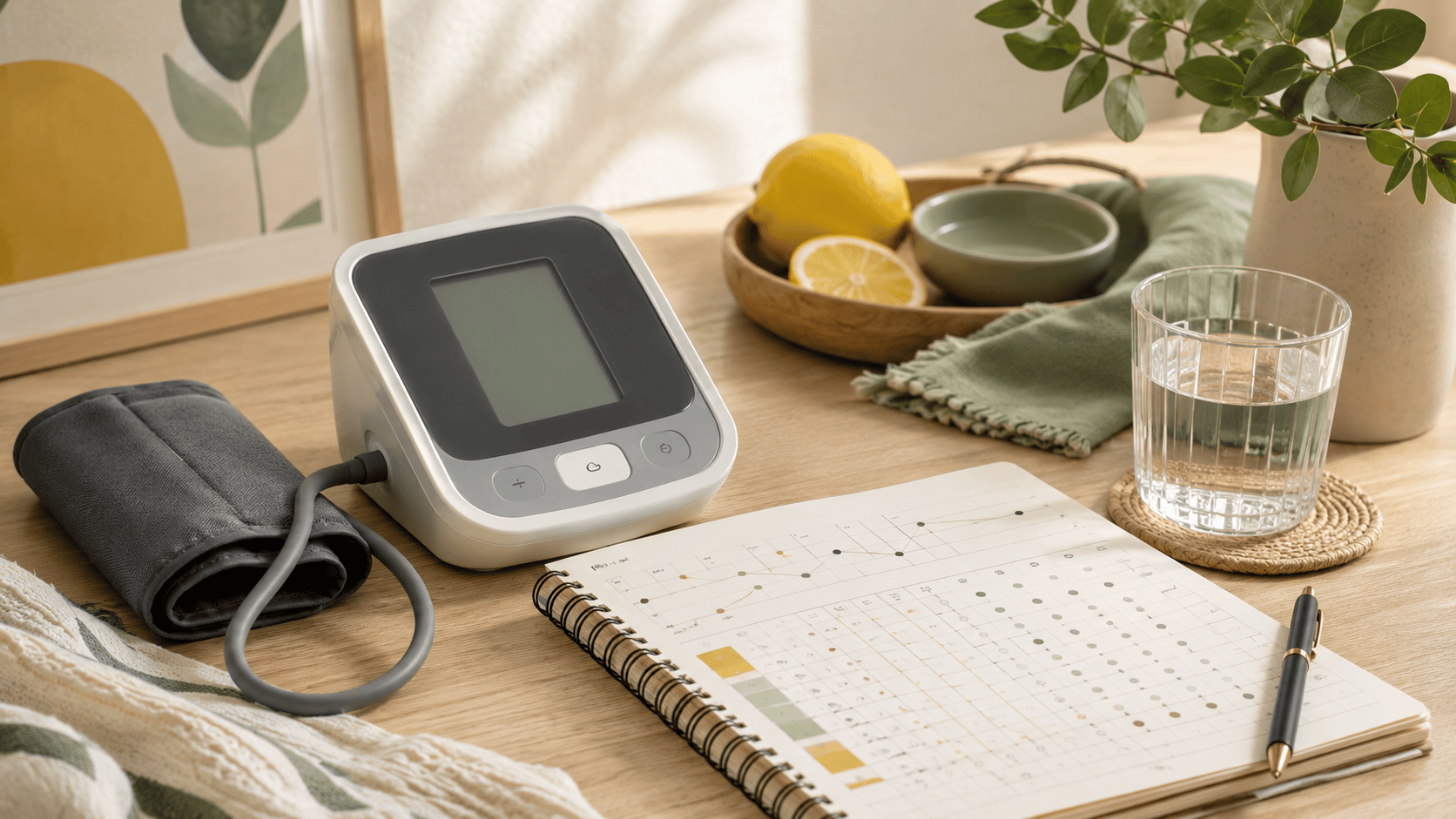
Home BP Tracking Template
| Field | What To Record | Why It Helps |
|---|---|---|
| Date and time | Morning, evening, or clinician-directed time | Helps compare same time each day |
| Reading 1 and 2 | Systolic blood pressure / diastolic | Shows the actual values and variation |
| Heart rate | Monitor reading if available | Adds context, especially with symptoms |
| Medication timing | Before or after blood pressure medication | Helps clinician interpret patterns |
| Recent triggers | Caffeine, exercise, smoking, alcohol, tobacco | Helps explain temporary changes |
| Body position | Seated, feet flat on the floor, arm supported | Helps measurement quality |
| Notes | Poor sleep, stress, pain, illness, symptoms | Helps connect readings to real life |
Common Measurement Mistakes
| Mistake | Why It Can Matter | Better Approach |
|---|---|---|
| Using the wrong cuff size | A poorly fitting blood pressure cuff can reduce accuracy | Choose a validated monitor with a cuff that fits your arm |
| Measuring over clothing | Fabric can interfere with the reading | Place the cuff on bare skin |
| Talking during the reading | Talking can raise the number temporarily | Sit quietly until the reading finishes |
| Crossing legs | Body position can affect blood pressure | Keep feet flat on the floor |
| Measuring right after coffee or activity | Caffeine and exercise can raise readings | Wait and measure under calmer conditions |
| Reacting to one high reading | One reading may not show the full pattern | Record trends and share them with your clinician |
What Home Readings Can And Cannot Tell You
Home readings can help you and your clinician see patterns over days or weeks. This can be useful for people with hypertension, elevated blood pressure, kidney disease, diabetes risk, family history, or other risk factors for heart attack and stroke.
However, home tracking does not diagnose you by itself. It also should not be used to stop, start, or change blood pressure medication without medical guidance. Low blood pressure symptoms such as faintness, dizziness, confusion, or weakness also deserve medical attention, especially if they are new or severe.
If your readings are repeatedly high, very low, or paired with chest pain, shortness of breath, weakness on one side, severe headache, or other concerning symptoms, follow emergency guidance and contact a healthcare professional.
Where To Get A Monitor And What To Look For
Many people buy a home blood pressure monitor online, at pharmacies, or through medical supply stores. Look for an upper-arm device that has been validated for accuracy, and make sure the cuff size fits your arm. Wrist devices may be less reliable if positioning is inconsistent.
Bring your monitor to a clinic visit when possible. Your healthcare professional can compare it with office equipment and confirm whether your technique is producing an accurate reading.
How Lemon Health Can Help
Lemon Health is the AI for your health: a personalized health companion that helps people turn health data, lifestyle, goals, wearables, apps, and preferences into practical recommendations.
For blood pressure tracking, Lemon can help you build a consistent routine, remember what context to record, and connect readings with sleep, meals, stress, movement, and medication timing. Lemon does not diagnose hypertension, treat high blood pressure, or replace your clinician. It helps you take the next practical step and have a clearer conversation with your care team.
FAQs
Q: Should I take blood pressure before or after medication?
A: Follow your healthcare professional's instructions. Some people are asked to measure before morning blood pressure medication, while others need a different routine based on their treatment plan.
Q: Is morning or evening better for home blood pressure tracking?
A: Many people track both morning and evening readings for a limited period, but the best schedule depends on why you are measuring. Consistency matters most, so measure at the same time each day when possible.
Q: What should I do if one reading is high?
A: Sit quietly, make sure your technique is correct, and repeat the reading as advised. One high reading is not the same as a trend, but very high readings or symptoms such as chest pain, shortness of breath, weakness, or severe headache need urgent medical guidance.
Q: Can home readings show white coat hypertension?
A: Home readings may help your clinician evaluate whether office readings are higher than readings in your usual environment. Do not make that conclusion on your own; share your log with a healthcare professional.
Q: How often should I replace my monitor?
A: Ask your clinician or pharmacist. Bring your monitor to appointments periodically so its readings can be compared with clinic equipment.
Related Resources
References
- American Heart Association. Home Blood Pressure Monitoring.
- American Medical Association. AMA MAP BP Measurement Resources.
- Centers for Disease Control and Prevention. High Blood Pressure.
Disclaimer: This content is for educational and general wellness purposes only and is not medical advice. Always consult a qualified healthcare professional about your health decisions.
 Get Started
 Get Started