
🍋 The Lemon Take
Why this matters: Breathing techniques are often marketed as quick stress fixes, but the real value is knowing which tool may help in the moment and when stress needs more support.
TL;DR: A physiological sigh may be useful as a quick reset, while box breathing may be better when you want a structured rhythm to slow down and refocus.
The positive: These are low-friction tools you can try in real life: one to three physiological sighs for a quick pause, or a few minutes of box breathing before a stressful meeting, bedtime, or a difficult transition.
The caution: Breathing exercises are not a replacement for mental health care or medical treatment; stop if you feel dizzy or uncomfortable, and talk to a clinician if you have panic symptoms, breathing problems, chest pain, or severe anxiety.
Introduction
When stress hits, your body often reacts before your mind catches up. Heart rate rises. Breathing gets shallow. Muscles tighten. Your nervous system shifts toward threat mode. That is why breathing exercises can feel powerful. Breathing is one of the few automatic body functions you can also control on purpose. A breathing pattern can send a real-time signal to the body that it is safe enough to slow down. Two popular tools are box breathing and cyclic sighing. Box breathing is structured and steady. Cyclic sighing, often called the physiological sigh, is built around a double inhale and long exhale. But the evidence is still developing, and neither technique replaces therapy, medication, sleep, movement, or medical care when those are needed.
What Is The Physiological Sigh?
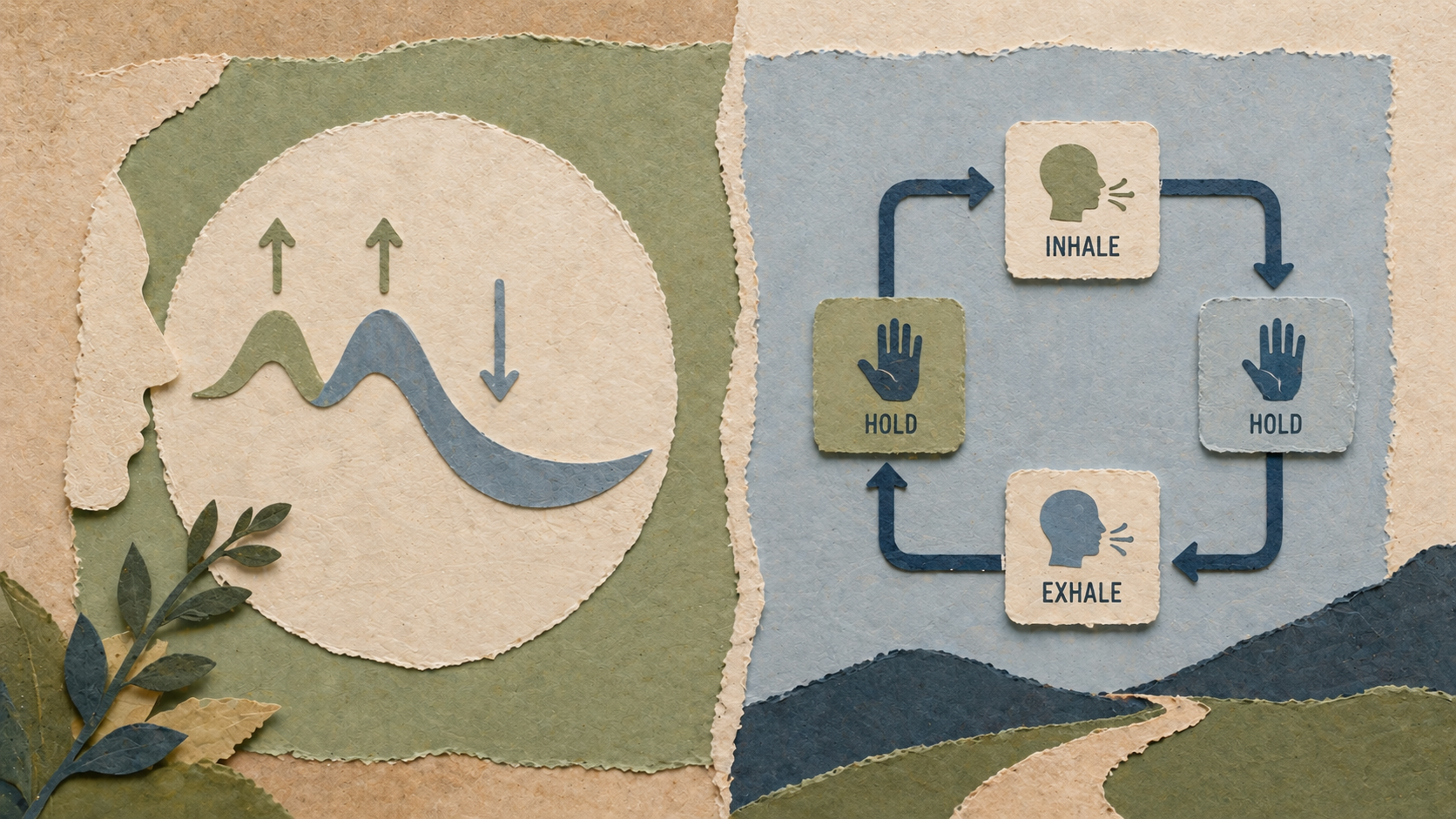
The physiological sigh is a breathing technique with three parts:
- Take a deep inhale through the nose.
- Before exhaling, take a second inhale, or "top-up" breath.
- Exhale slowly and fully through the mouth.
This double inhale helps expand the lungs, while the long exhale emphasizes the body's parasympathetic nervous system, the branch associated with rest, recovery, and downshifting.
What Is Box Breathing?
Box breathing is usually taught as a four-part pattern:
- Inhale for 4 counts.
- Hold for 4 counts.
- Exhale for 4 counts.
- Hold for 4 counts.
The "box" comes from the equal sides of the pattern. Box breathing can be useful because it gives the mind something simple to follow. It can help interrupt spiraling thoughts and bring attention back to the body. Because it includes breath holds, box breathing may not feel good for everyone. Some people find the holds grounding. Others find them uncomfortable, especially during anxiety, asthma symptoms, pregnancy, dizziness, or panic.
Physiological Sigh vs. Box Breathing
| Technique | Pattern | Best Fit | Possible Watch-Out |
|---|---|---|---|
| Physiological sigh | Double inhale, long exhale | Fast stress relief, emotional regulation, downshifting arousal | May feel odd at first; avoid forcing the breath |
| Cyclic sighing | Repeated physiological sigh for several minutes | Daily stress management practice | Can cause lightheadedness if done too aggressively |
| Box breathing | Equal inhale, hold, exhale, hold | Focus, composure, structured breathing | Breath holds may feel uncomfortable for some people |
The practical difference is the exhale. A long exhale can help slow breathing rate and reduce physiological arousal. Box breathing is more balanced and controlled, but the breath holds can be challenging if your body already feels stressed.
What The Research Says
A randomized controlled trial published in Cell Reports Medicine compared several 5-minute daily breathing interventions with mindfulness meditation over one month. The breathing conditions included cyclic sighing, box breathing, and cyclic hyperventilation with retention. Breathwork, especially exhale-focused cyclic sighing, produced greater improvement in mood and reduction in respiratory rate compared with mindfulness meditation. The study looked at outcomes such as mood, anxiety, physiological arousal, respiratory rate, heart rate, and heart rate variability.
Stanford Medicine also summarized the findings, noting that participants practiced for five minutes daily and that cyclic sighing showed the greatest daily improvement in positive feelings among the breathing groups. That is promising, but the nuance matters. The study involved healthy volunteers and was preliminary. It does not prove that cyclic sighing treats anxiety disorders, replaces mental health care, or directly lowers cortisol faster than every other intervention. If you see a headline claiming one breath "crushes cortisol," be cautious.
Does The Physiological Sigh Work Immediately?
It can, for some people. A single physiological sigh may help interrupt a stress response in the moment. Repeating it for a few minutes may produce a stronger effect. The mechanism is partly mechanical and partly nervous-system based. When you are stressed, breathing can become shallow and carbon dioxide levels can shift. A deep inhale, second inhale, and extended exhale can change the breathing pattern and give the body a strong cue to slow down.
The "works immediately" part depends on the person and the situation. If you are mildly stressed before a meeting, one to three cycles may help. If you are in a panic attack, grieving, sleep deprived, or dealing with chronic anxiety, breathwork may help but may not be enough by itself.
How To Try Cyclic Sighing Safely
Start gently. Do not force giant breaths.
- Sit or stand somewhere safe.
- Inhale through your nose.
- Take a second small inhale before you exhale.
- Exhale slowly through your mouth, longer than the inhale.
- Repeat for 1 to 5 minutes.
- Stop if you feel dizzy, numb, panicky, or uncomfortable.
You can use the physiological sigh as a real-time tool before a stressful conversation, after reading a tense message, before sleep, or when your wearable shows an elevated heart rate from stress rather than exercise.
When Box Breathing May Be Better
Box breathing may be a better fit when you want steadiness rather than a fast downshift. It can be helpful before a presentation, during a focus block, or when you want a simple breathing pattern that keeps your attention anchored. Try a softer version if the classic 4-4-4-4 pattern feels too intense:
- Inhale for 3.
- Hold for 1 or 2.
- Exhale for 4.
- Pause naturally.
Breathwork should feel supportive, not like a test of willpower.
Who Should Be Cautious?
Talk to a healthcare professional before using structured breathwork if you have significant respiratory disease, use nebulizer medication, have uncontrolled cardiovascular symptoms, panic disorder, trauma symptoms triggered by body sensations, fainting episodes, pregnancy complications, or any condition where breath holds or changes in breathing may be risky. Breathing exercises can support well-being, but they are not a stand-alone treatment for anxiety disorders, depression, PTSD, asthma, heart disease, or other medical conditions.
How Lemon Health Can Help
Stress tools work best when they show up at the right moment. That is where Lemon Health can help. Lemon connects health data, routines, preferences, wearables, sleep, activity, and goals so you can take action instead of just noticing a problem. If your heart rate is elevated during a stressful workday, Lemon can suggest a quick physiological sigh practice. If your sleep data shows stress spilling into bedtime, Lemon can help you build a wind-down routine. As the AI for your health, Lemon is not a medical provider or mental health treatment. It is a personalized health companion that helps you turn signals into simple actions that fit your life.
FAQs
Q: What Is A Physiological Sigh?
A physiological sigh is a double inhale followed by a long exhale. In cyclic sighing, you repeat that pattern for several minutes.
Q: Is Cyclic Sighing Better Than Box Breathing?
It depends on the goal. Cyclic sighing may be better for quick downshifting because it emphasizes slow exhalation. Box breathing may be better for focus and composure.
Q: Does The Physiological Sigh Lower Cortisol?
It may reduce physiological arousal, but direct cortisol claims should be made cautiously. Current research more clearly supports effects on mood, anxiety, and respiratory rate in studied settings.
Q: Can Breathwork Help Anxiety?
Breathwork can be a useful stress management tool for some people. It is not a replacement for therapy, medication, or medical care when anxiety is persistent, severe, or impairing.
Q: How Often Should I Practice?
A practical starting point is 1 to 5 minutes daily or as needed during stress. Keep it gentle and stop if it makes symptoms worse.
Related Resources
References
- Balban et al., Cell Reports Medicine: Brief Structured Respiration Practices Enhance Mood and Reduce Physiological Arousal
- Stanford Medicine: Cyclic Sighing Can Help Breathe Away Anxiety
- Stanford Medicine Magazine: Cyclic sighing tops other breathing methods for calming down
Disclaimer: This content is for educational and general wellness purposes only and is not medical advice. Always consult a qualified healthcare professional about your health decisions.
 Get Started
 Get Started