
🍋 The Lemon Take
Why this matters: "Sugar is sugar" sounds simple, but it misses the bigger question: what food the sugar comes packaged in, and how that food affects fullness, habits, and health over time.
TL;DR: Your body recognizes sugar as carbohydrate, but whole foods like fruit, yogurt, and oats usually come with fiber, water, protein, or nutrients that added-sugar foods often lack.
The positive: You do not need to fear fruit or naturally sweet whole foods; a practical first step is reducing sugary drinks, desserts, and ultra-processed snacks while keeping nutrient-rich foods in rotation.
The caution: "Natural" does not mean unlimited, and people with diabetes, prediabetes, blood sugar swings, or CGM-detected spikes may need more personalized guidance from a clinician or dietitian.
Introduction
A whole orange and a can of soda may both contain sugar. But they are not metabolically identical meals. That is the "sugar paradox." Your body recognizes sugar molecules, but it also responds to the full food: fiber, water, protein, fat, portion size, processing, and how quickly you eat or drink it. So no, most people do not need to quit fruit to manage blood sugar. But many people do benefit from reducing added sugar, especially from sugary drinks, desserts, sweet snacks, sports drinks, sweetened coffee, flavored yogurts, ketchup, condiments, and other processed foods.
What Is Natural Sugar?
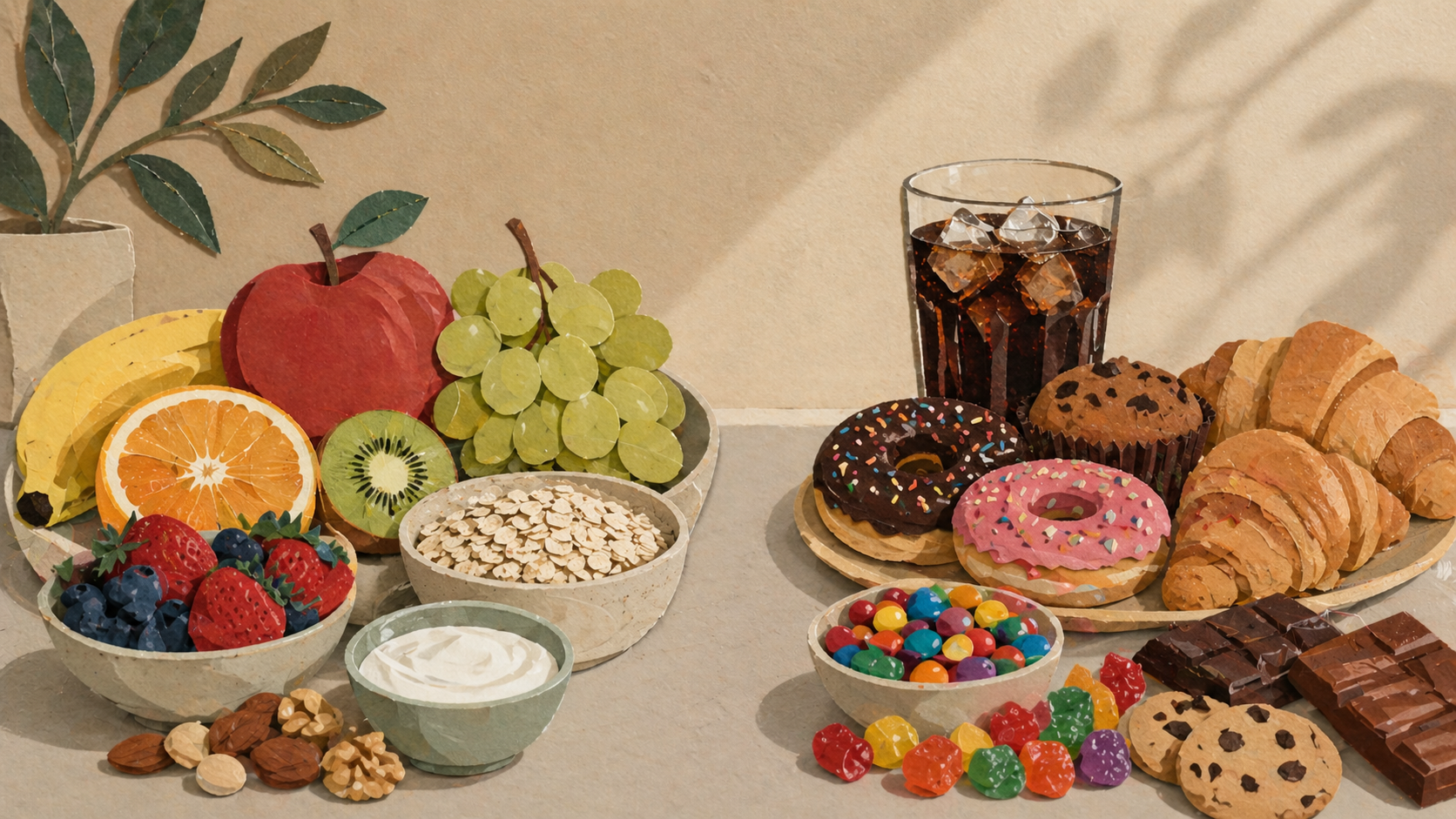
Natural sugar refers to sugars that occur naturally in whole foods. Fruit contains fructose and glucose. Milk and many dairy products contain lactose. Sweet potatoes, whole grains, and vegetables contain carbohydrates that break down into glucose during digestion. The key is context. Whole foods often come with fiber, water, vitamins, minerals, and other nutrients. That can slow digestion and make the food more filling. For example, eating an orange usually takes longer and feels more satisfying than drinking orange soda. Naturally occurring sugars are not automatically "free foods," especially for people managing blood sugar. But for most people, whole fruit, unsweetened dairy, beans, whole grains, and vegetables can fit into a healthy eating pattern.
What Is Added Sugar?
Added sugar is sugar added during processing, preparation, or at the table. The FDA explains that added sugars on the Nutrition Facts label include sugars added during processing, packaged sweeteners, syrups, honey, and sugars from concentrated fruit or vegetable juices. Common names for added sugars include:
- Sucrose
- Dextrose
- Maltose
- High fructose corn syrup
- Corn sweetener
- Brown sugar
- Raw sugar
- Table sugar
- Maple syrup
- Honey
- Fruit juice concentrates
- Invert sugar
Food labels can be confusing because "total sugars" includes both natural sugar and added sugar. The "Added Sugars" line shows how much was added.
Natural Sugar vs. Added Sugar: Does The Body Know?
At the molecular level, your body digests carbohydrates into smaller sugars such as glucose, fructose, and galactose. Glucose raises blood sugar directly. Fructose is processed differently, largely in the liver. Lactose breaks down into glucose and galactose. But your body does not respond only to isolated molecules. It responds to the entire food. A whole apple has natural sugar, but it also has fiber, water, volume, and chewing time. Apple juice has sugar without the same fiber structure. Soda has added sugar and very little nutrition. Candy, ice cream, sweetened cereal, and pastries may combine added sugar with refined starches and fats in ways that are easy to overeat. This is why "sugar is sugar" is too simple, and "natural sugar is always healthy" is also too simple.
Why Added Sugar Matters For Health
Added sugar can be part of an overall eating pattern, but too much added sugar can crowd out nutrient-dense foods and increase calorie intake without much fullness. The CDC states that consuming too many added sugars can contribute to health problems such as weight gain, obesity, type 2 diabetes, and heart disease. Its added sugar overview also notes that the Dietary Guidelines for Americans recommend limiting added sugar to less than 10% of total daily calories for people age 2 and older.
The American Heart Association gives a stricter target for heart health. Its added sugars guidance recommends limiting added sugars to no more than 6% of calories per day. One cookie does not cause disease. Repeated high intake can make weight management, blood sugar control, and cardiovascular disease prevention harder for some people.
The Fiber Buffer: Why Fruit Is Different
Fiber is one reason whole fruit behaves differently from sugary drinks. Fiber slows digestion, adds fullness, and changes how quickly carbohydrates reach the bloodstream. Whole fruit also comes with water and volume. It is harder to eat four oranges than to drink a large glass of orange juice. That is why the practical advice is usually not "avoid fruit." Instead:
- Choose whole fruit more often than juice.
- Pair fruit with protein or healthy fats if you notice blood sugar swings.
- Watch dried fruit portions, because the sugar is concentrated.
- Choose unsweetened dairy when possible.
- Read the nutrition facts label on packaged foods.
How To Read Food Labels For Sugar
Use the label in this order.
1. Check Serving Size
The amount of sugar listed applies to one serving. If you eat two servings, double the number.
2. Compare Total Sugars And Added Sugars
Total sugars include both natural sugar and added sugar. Added sugars tell you how much was added during processing or preparation.
3. Scan The Ingredients List
Look for high fructose corn syrup, sucrose, dextrose, maltose, brown sugar, corn syrup, honey, maple syrup, fruit juice concentrates, and other sweeteners.
4. Be Careful With Claims
"No added sugar" means no sugar was added, but the product may still contain natural sugar. "Sugar-free" usually means less than 0.5 grams of sugar per serving, but it may contain sugar alcohols or other sweeteners. "Less sugar" means less than a comparison product, not necessarily low sugar.
Who Should Pay Closer Attention?
This topic may be especially relevant if you have prediabetes, diabetes, high triglycerides, hypertension, weight gain concerns, heart disease risk, polycystic ovary syndrome, fatty liver risk, or frequent energy crashes. It may also matter if your diet includes several hidden sources of added sugar each day, such as sweetened coffee, flavored yogurt, granola bars, sports drinks, sauces, breakfast cereal, and desserts. Talk to a healthcare provider or dietitian if you are unsure how to balance carbohydrates with medication, insulin, pregnancy, intense exercise, or a medical condition.
Practical Steps To Reduce Added Sugar Without Quitting Everything
You do not have to go sugar-free. Start with the highest-impact swaps.
- Replace one sugary drink per day with water, sparkling water, or unsweetened tea.
- Choose plain yogurt and add fruit instead of buying heavily sweetened versions.
- Compare condiments and sauces; ketchup, barbecue sauce, and dressings can add up.
- Keep fruit, nuts, Greek yogurt, or whole grain snacks around so sweets are not the only convenient option.
- Use the Nutrition Facts label once per grocery trip to choose a lower added sugar option.
The goal is not perfection. It is to make healthy eating easier and more automatic.
How Lemon Health Can Help
Lemon Health can help connect meals, preferences, activity, sleep, wearable data, and health goals. As a personalized health companion, Lemon helps turn information into action: a lower-sugar breakfast swap, a better grocery choice, a reminder to pair carbs with protein, or a simple habit that fits your day. That is especially useful when you are motivated but stuck.
FAQs
Q: Is Natural Sugar Better Than Added Sugar?
Usually, yes, when it comes from whole foods like fruit, vegetables, and unsweetened dairy. The sugar comes with fiber, water, and nutrients. Added sugar often adds calories without much nutrition.
Q: Do I Need To Quit Fruit To Manage Blood Sugar?
Most people do not need to quit whole fruit. Portion size, type of fruit, pairing with protein or fat, and personal glucose response matter. People with diabetes should follow individualized guidance.
Q: Is Honey Or Maple Syrup Healthier Than Table Sugar?
Honey and maple syrup may contain small amounts of other compounds, but they still count as added sugars and should be limited like other sweeteners.
Q: What Does No Added Sugar Mean?
It means no sugar or sugar-containing ingredient was added during processing. It does not mean the food has no sugar or is automatically low calorie.
Q: What Is The Bottom Line?
Focus less on fearing natural sugar and more on reducing frequent sources of added sugar, choosing whole foods, reading labels, and building meals that support stable energy.
Related Resources
References
- FDA: Added Sugars on the Nutrition Facts Label
- CDC: Get the Facts, Added Sugars
- American Heart Association: Added Sugars
Disclaimer: This content is for educational and general wellness purposes only and is not medical advice. Always consult a qualified healthcare professional about your health decisions.
 Get Started
 Get Started