
🍋 The Lemon Take
Why this matters: Low impact strength training can help build muscle and confidence without jumping, pounding, or high-impact workouts.
TL;DR: Use bodyweight exercises, resistance bands, light weights, and controlled tempo to build strength safely.
The positive: Joint-friendly training can still challenge your muscles and support healthy aging, mobility, and everyday function.
The caution: Stop and ask a clinician or physical therapist if you have sharp joint pain, swelling, chest pain, dizziness, or unusual symptoms.
What Is Low-Impact Strength Training?
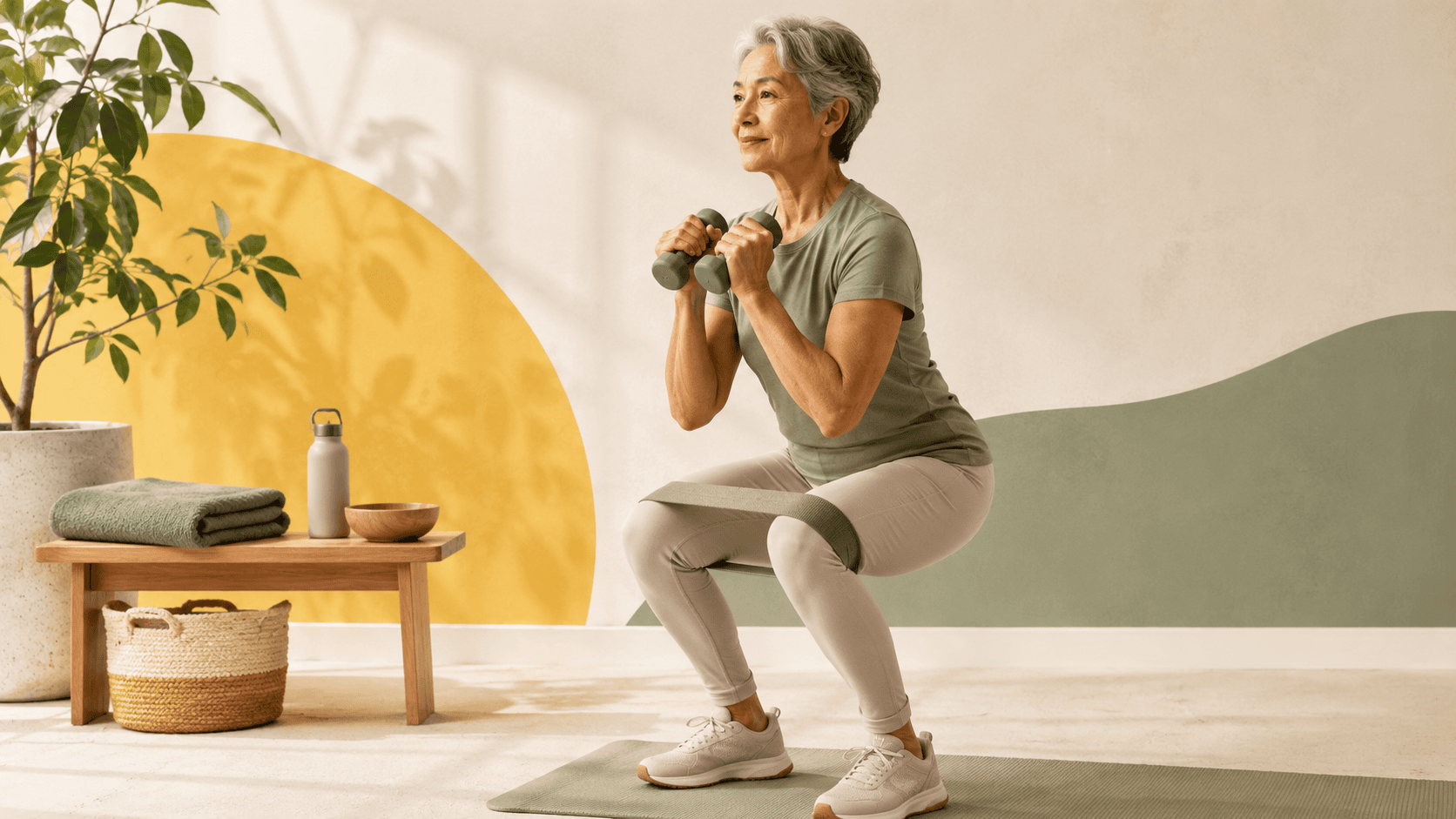
Low-impact strength training is resistance exercise that reduces pounding on your joints while still challenging your muscles. Instead of jumping lunges, sprint intervals, or fast burpees, you might use chair squats, a glute bridge, a wall push-up, a plank, resistance bands, light weights, or slow bodyweight movements.
The "low impact" part refers to stress from impact, not the value of the workout. A controlled set of squats can train the quads, hamstrings, glutes, and core. A bent-over row can strengthen the upper back. A bicep curl and triceps extension can train the arms. Lateral raises can challenge the shoulders. Done consistently and progressed safely, these exercises can support muscle mass, posture, bone density, balance, and everyday function.
Can Low-Impact Strength Training Build Muscle?
Yes, low-impact workouts can help build muscle when they are challenging enough and progress over time. Your muscles respond to tension, effort, and consistency. You do not need jumping or heavy barbells to create that stimulus.
For a beginner, a chair squat may be enough. Later, the same person may hold light weights, use a slower lowering phase, add a pause, increase range of motion, or move to adjustable dumbbells. The exercise stays joint-friendly, but the challenge grows.
This matters because many people avoid strength work because they picture a crowded gym, heavy machines, or pain. In reality, low impact strength training can be done in a living room with a chair, resistance bands, and a few dumbbells.
Why It Matters For Healthy Aging And Daily Life
Strength is not only about appearance. Strength matters for getting out of a chair, carrying groceries, climbing stairs, picking up a child, protecting balance, and staying independent. For older adults, muscle-strengthening activity is often recommended alongside aerobic activity and balance work. Strength training may also support heart health as part of a broader active lifestyle.
Bone density is another reason strength matters. People with osteoporosis, arthritis, or joint concerns should get individualized advice, but avoiding all strength work can make daily activities harder over time. The right plan may include modified movements, slower progress, and professional guidance.
Strength workouts can also burn calories, but that should not be the only goal. The bigger win for many people is better function, less fear of movement, and a routine they can repeat.
A Beginner Full Body Workout
Start with two days per week, leaving at least one day between sessions. Move slowly and keep the effort moderate.
Warm Up: 5 Minutes
Try marching in place, shoulder circles, gentle yoga-inspired mobility, hip circles, and easy low-impact cardio such as a slow step-touch. The goal of the warm up is to raise body temperature and prepare your joints.
Workout: 1 To 2 Sets Each
- Chair squat: Sit back toward a chair, stand tall, and keep knees tracking comfortably. This trains the lower body, especially quads and glutes.
- Glute bridge: Lie on your back with knees bent and lift your hips. This targets glutes and hamstrings with low joint stress.
- Wall push-up: Place hands on a wall and bend elbows slowly. This trains chest, shoulders, and triceps.
- Resistance band row or bent-over row: Pull elbows back and squeeze shoulder blades gently. This supports the upper back and posture.
- Bicep curl: Use light weights or bands and control the movement.
- Lateral raises: Lift arms to the side with very light weights or no weights. Keep shoulders relaxed.
- Plank variation: Use a wall, counter, or knees. Keep breathing and stop before form breaks.
- Supported lunges or split squats: Hold a chair and use a short range of motion. Skip lunges if they irritate your knees and use step-ups or chair squats instead.
How To Progress Without Irritating Your Joints
Progress does not have to mean "go harder every workout." Try one small change at a time:
- Add one or two repetitions.
- Add a second set.
- Slow down the lowering phase.
- Increase range of motion only if it feels controlled.
- Use a slightly stronger band or heavier dumbbell.
- Reduce rest a little while keeping proper form.
Pain is information. Muscle effort, warmth, and mild next-day soreness can be normal. Sharp pain, joint catching, swelling, numbness, or pain that changes how you walk is different. Do not push through that.
Who This Is Especially Helpful For
Low-impact strength training may be a good fit for beginners, older adults, people with joint pain, people returning after a long break, busy parents, and anyone who wants a realistic strength training at home plan. It can also pair well with walking, cycling, swimming, or other low-impact cardio.
If you have arthritis, osteoporosis, recent surgery, a heart condition, uncontrolled high blood pressure, or a history of falls, ask a healthcare professional what movements are safest for you.
How Lemon Health Can Help
Lemon Health is the AI for your health. It helps connect your goals, schedule, preferences, wearables, and daily context into simple actions. For strength, that might mean a 15-minute joint-friendly full body workout when you have low time, a lighter mobility day when recovery is poor, or a progression when your routine has become too easy.
Lemon is not a physical therapist or medical provider. It does not diagnose injuries or replace clinical care, but it can help you take the next practical step and stay consistent.
FAQs
Q: Can low impact strength training build muscle?
A: Yes. Muscle growth depends on challenge, consistency, and progression. Low-impact exercises can build muscle when they are difficult enough for your current level and progressed safely.
Q: How many days per week should I start with?
A: Many beginners start with two days per week. Add more only when soreness, energy, schedule, and joints are handling the routine well.
Q: What equipment do I need?
A: You can start with bodyweight, a chair, and resistance bands. Light weights or adjustable dumbbells can help later, but they are not required on day one.
Q: What should I do if an exercise causes joint pain?
A: Stop that movement, reduce range of motion, try a modification, or ask a clinician or physical therapist. Do not push through sharp or worsening pain.
Related Resources
References
- Centers for Disease Control and Prevention. Adult Activity: An Overview.
- American Heart Association. Strength and Resistance Training Exercise.
- Centers for Disease Control and Prevention. Older Adults: An Overview.
- American College of Sports Medicine. Resistance Training Prescription for Muscle Function, Hypertrophy, and Physical Performance in Healthy Adults: An Overview of Reviews.
Disclaimer: This content is for educational and general wellness purposes only and is not medical advice. Always consult a qualified healthcare professional about your health decisions.
 Get Started
 Get Started